

The Climate of Palm Bay, Florida: A Comprehensive Analysis
Introduction
Palm Bay, Florida, situated in the southeastern region of the state, is recognized for its warm climate and scenic beaches. The temperature patterns in this city are of interest to local residents, visitors, and climate researchers alike. This article offers a thorough analysis of these temperature patterns, examining the factors shaping the local climate, seasonal shifts, and effects on the community and surrounding environment.

Geographical Setting
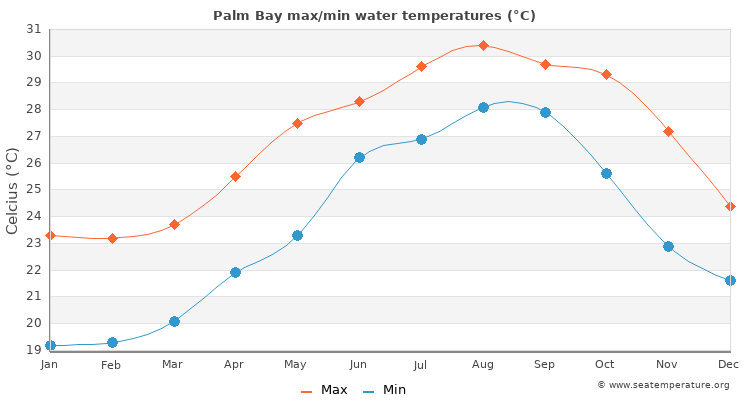
Palm Bay lies in Brevard County, Florida, with the Atlantic Ocean to its east. Its location falls within the subtropical climate zone, marked by mild winters and hot, humid summers. Average temperatures in the city span from 55°F (13°C) in January to 90°F (32°C) in July.
Factors Influencing the Climate
Palm Bay’s climate is shaped by multiple factors, such as its closeness to the ocean, the Gulf Stream, and trade winds. These ocean currents and winds help regulate temperatures by carrying warm water and humid air from the Gulf of Mexico and Atlantic Ocean.
Proximity to the Ocean
The city’s coastal position contributes to its mild climate. The ocean functions as a heat sink, absorbing and releasing heat gradually, which moderates temperatures. In summer, it cools the air to avoid extreme heat; in winter, it warms the air to lower the chance of cold spells.
Gulf Stream
The Gulf Stream— a warm ocean current originating in the Gulf of Mexico— flows northward along Florida’s eastern coast. This current carries warm water and, in turn, warm air to Palm Bay, supporting the city’s consistently warm year-round climate.
Trade Winds
Trade winds— prevailing east-to-west winds across tropical and subtropical areas— also influence Palm Bay’s climate. These winds transport moisture from the ocean, resulting in frequent cloud cover and periodic rainfall.
Seasonal Variations
Palm Bay has distinct seasonal shifts, with the most notable differences between winter and summer.
Winter
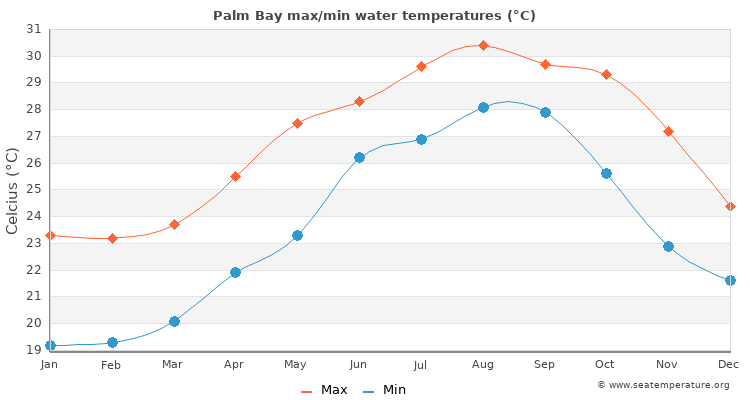
Winters in Palm Bay are typically mild, with temperatures rarely falling below freezing. January’s average high is about 70°F (21°C), while the average low is around 55°F (13°C). Winter also brings lower humidity and less rainfall than other times of the year.
Summer
Summers in Palm Bay are hot and humid, with temperatures often topping 90°F (32°C). July’s average high is approximately 90°F (32°C), and the average low is around 75°F (24°C). Summer is also the wettest season, with frequent thunderstorms and occasional hurricanes.

Implications for the Local Community
Palm Bay’s climate has several effects on the local community, including impacts on agriculture, tourism, and public health.
Agriculture
Palm Bay’s mild climate supports year-round cultivation of various crops. The local agricultural sector benefits from consistent temperatures and ample rainfall, making the area ideal for growing citrus, vegetables, and other produce.
Tourism
Tourism is a key industry in Palm Bay, where the warm climate draws visitors from across the globe. Beaches, parks, and outdoor activities are top attractions, and the pleasant weather supports a strong tourist season.
Public Health
Palm Bay’s warm, humid climate can present public health challenges, especially in summer. Heat-related illnesses like heat exhaustion and heat stroke are more prevalent during the hot, humid season. High humidity can also worsen respiratory conditions.

Conclusion
In conclusion, Palm Bay’s temperatures are shaped by a mix of geographical factors: its coastal position, the Gulf Stream, and trade winds. The city has distinct seasonal shifts— mild winters and hot, humid summers. Its climate has notable effects on the local community, including agriculture, tourism, and public health. As global climate change continues, it is critical to monitor and understand Palm Bay’s climate patterns to reduce potential risks and adapt to future shifts.
Recommendations and Future Research
To deepen understanding of Palm Bay’s climate and its potential future shifts, the following recommendations and research directions are suggested:
1. Long-term Climate Monitoring: Maintain ongoing monitoring of Palm Bay’s temperature and weather patterns to detect long-term trends or shifts.
2. Climate Modeling: Use climate models to forecast future temperature shifts in Palm Bay and evaluate potential impacts on the local community and environment.
3. Public Awareness Campaigns: Educate residents about the significance of climate change and its specific local impacts to encourage sustainable practices and preparedness.
4. Infrastructure Adaptation: Plan and carry out infrastructure upgrades to withstand potential temperature and weather shifts— such as enhanced drainage systems and heat-resistant structures.
By acting on these recommendations and conducting additional research, we can better understand and prepare for Palm Bay’s future climate.
