Title: Motels vs. Hotels: A Clear Comparison
Introduction:
The terms “motel” and “hotel” are often used interchangeably, but they refer to distinct accommodation types with unique traits and purposes. This article explores their key differences—including characteristics, advantages, and drawbacks—to help readers make informed choices when selecting lodging that fits their needs.
Definition and Origin
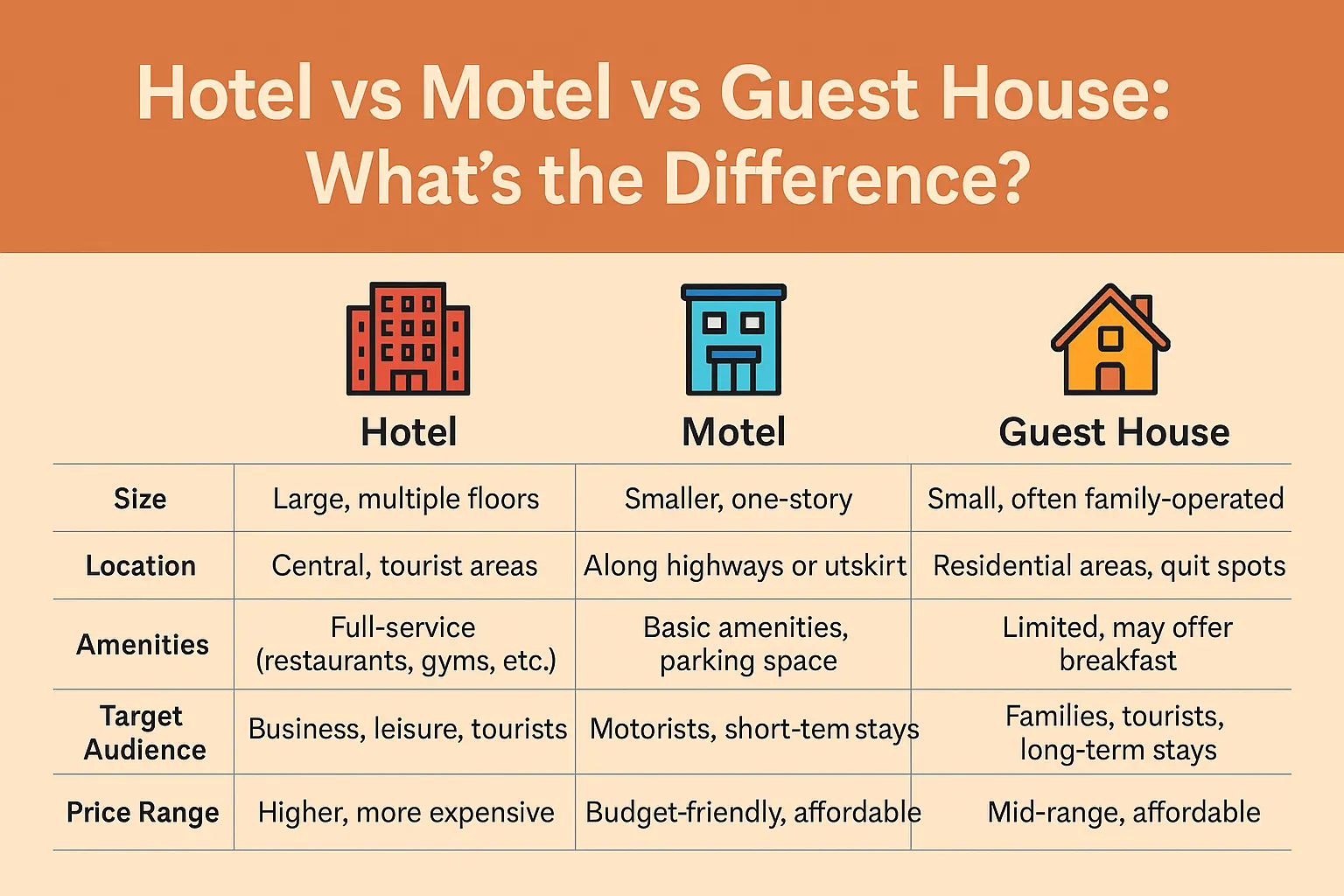
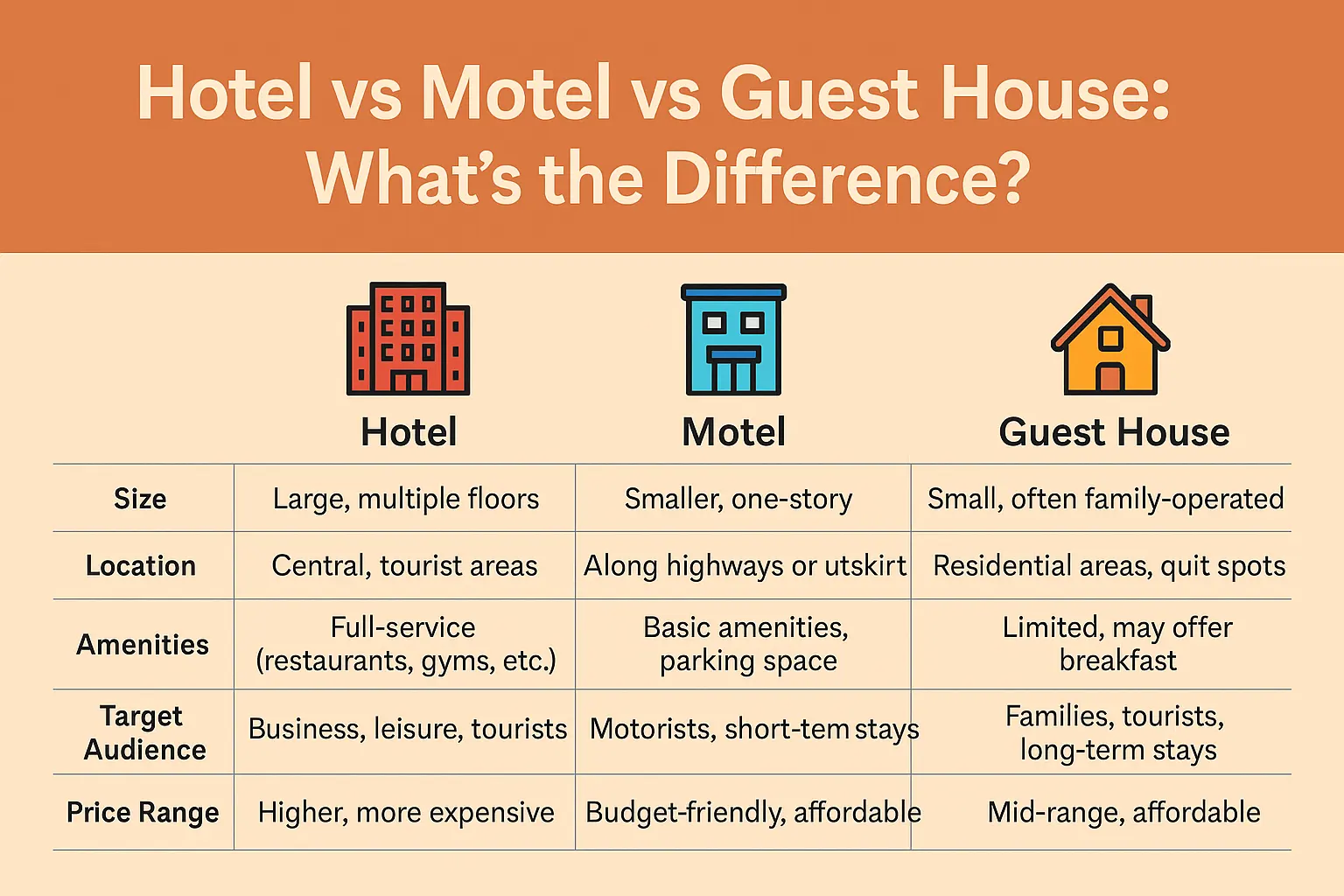
First, let’s clarify what motels and hotels are. A motel is an accommodation type tailored for travelers, usually located near highways or major roads. The word itself combines “motor” and “hotel,” reflecting its roots as a spot for motor vehicle travelers. In contrast, hotels are larger establishments offering diverse lodging options—like rooms, suites, and apartments—to a wider range of guests.
Location and Accessibility
One key difference is location. Motels are typically near highways or major roads, making them easy to reach for drivers. This placement suits road trippers, families, or anyone needing a convenient stop while traveling. Hotels, by contrast, are often in urban centers, business districts, or tourist spots, with easy access to public transit and local amenities.
Size and Scale
Motels are usually smaller than hotels, with a limited number of rooms often arranged in a linear or U-shaped layout—making it easy for guests to reach their rooms. This compact design works well for travelers prioritizing convenience. Hotels, however, are larger, with multiple floors, extensive amenities, and a wide range of room types, allowing them to serve diverse guests like business travelers, families, and tourists.
Facilities and Services
Facilities and services also differ significantly. Motels often offer basic amenities: comfortable beds, private bathrooms, and sometimes small kitchenettes. Additional perks may include free Wi-Fi, parking, and 24-hour front desk service. Hotels, by contrast, provide a broader range of amenities—like swimming pools, fitness centers, on-site restaurants, room service, and concierge support—appealing to guests seeking luxury and convenience.
Price and Affordability
Pricing structures vary too. Motels are generally more affordable, making them ideal for budget-conscious travelers. Their compact size and limited amenities keep operating costs low, leading to competitive prices. Hotels tend to be pricier due to their larger scale, extensive amenities, and higher staffing needs—but they often offer multiple room types and pricing tiers to fit different budgets.
Target Audience
Motels and hotels cater to different audiences. Motels are designed primarily for travelers on the go—road trippers, families, or individuals needing a convenient stop while traveling. Their strategic locations and affordable prices make them perfect for these groups. Hotels, however, serve a broader range: business travelers, tourists, and those seeking luxury and comfort. Their extensive amenities make them suitable for short stays, extended vacations, or special occasions.
Conclusion
In conclusion, motels and hotels differ in definition, location, size, facilities, pricing, and target audience. Motels are compact, affordable, and convenient for travelers on the move, while hotels offer more amenities and serve a diverse clientele. Understanding these differences helps anyone choose the right lodging for their trip.
By exploring the unique features and purposes of motels and hotels, this article has clarified their key distinctions. When selecting lodging, it’s important to consider factors like location, size, amenities, and budget. As the travel industry evolves, both motels and hotels will need to adapt to changing guest preferences and market demands. Further research can help both sectors thrive and deliver the best possible experiences for travelers.